What Makes These Cities Feel Like Themselves
August 25, 2025
I just read a friend's post about the unique aspects that makes certain cities feel like uniquely that city, and I wanted to write down a few things that come to mind for me for cities I'm familiar with.
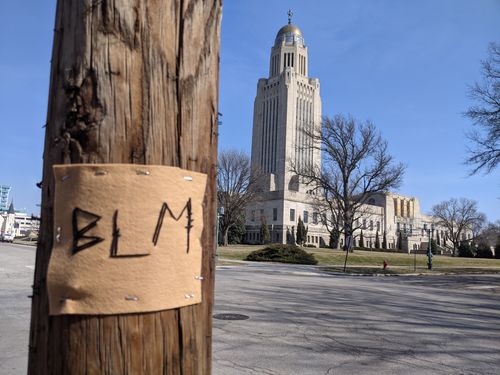
Like Comfect/The Quad Urbanist says in his post, these aren't necessarily things that are truly unique for that place, but just uncommon enough, or maybe just noticeable enough, that it feels like they form part of the identity of the city.
Comfect pointed out Minneapolis has free public wading pools, and I was delighted to learn when we moved here that Ottawa does, too! They are actually staffed by city-employed lifeguards, though, and only filled when the lifeguards are present, and drained at the end of each swimming session. In addition to the many wading pools, there are also over 100 splash pads spread across city parks, and there are lots of city parks in general.
The EarlyON program of free drop-in play groups for kids aged 0-6 is technically an Ontario program, but feels very Ottawa to me since my experience of Ontario is, well, Ottawa, mostly. They're held at different times throughout the week in lots of different locations, sharing buildings with childcare centers or elementary schools or office buildings. You can just show up with your kid and hang out with the other parents (it's not a daycare situation; the adult who brought the kid has to stay present the whole time) and they have a ton of cool stuff for the kids to do.
In general, it feels like Ottawa is a city that knows that parents of young kids live here, and actually thinks that's good, and maybe it should be nice to be a parent of a young kid, even. The malls have spacious, well-appointed nursing rooms (at Bayshore, you even have to get buzzed in to enter, like a secret agent on a hungry-baby-related mission).
# Lincoln
Lincoln is the city I've lived in the longest, having lived there for a bit over a decade, and growing up with it as the main place we'd go for any shopping beyond groceries.
Comfect points out that Lincoln has nice public library hours, and since Lincoln is the only public library system I'd really experienced much until we moved last year, I had never really appreciated that! Ottawa's library branches tend to be open later into the evenings on weekdays which is nice, but closed entirely on Sundays which feels like prime library time to me, for a lazy mid-afternoon pick-up or some time browsing the magazine racks or featured selections.
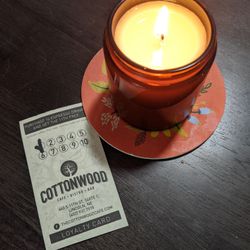
For me though, the thing that feels most distinctly Lincoln is the very strong coffee shop culture. There are really quite a lot of great local coffee shops in Lincoln for a city of its size, and a good spread of the kinds of settings I look for in a coffee shop: nice to hang out and chat with a friend, but also a fine place to sit with a laptop and get some work done. In college I mostly went to The Coffee House or Cottonwood to study or do homework. Later friends preferred the Mill (now up to 5 locations in Lincoln; 3 in range of downtown), but I always had a soft spot for Meadowlark or Cultiva. I was never bold enough to let myself into the cleaning closet and restart the router at Cultiva like a friend would sometimes do when the wifi wasn't working[1], but the staff would usually do it if you asked. And I liked the option of getting crepes for a lunch or snack. Hub Cafe's hours had it closing at 2:30pm on weekdays for years, so it was nice if you could make it out for a remote work session before lunch and planned to move on shortly after. Crescent Moon in a Haymarket basement has such a cozy, artsy vibe. The last few years since Mana Games has opened up, I enjoyed going there for coffee even when not looking to play games. And Indigo Bridge Books was a great spot for coffee or hanging out, at its Haymarket location years ago or the one on 16th St. (also now closed) more recently.
I've been working remote since 2017 or so, and for me the years from 2017 and ending in March 2020 were really the glory days of hanging out in coffee shops with friends in Lincoln. On weekends we'd meet up at one of them and just chat, and even if you didn't text in advance about where you were headed, there was a good chance you'd run into friends there anyways. During the week, I had a handful of friends who also worked remotely, and we'd meet up at any of the above or a different one I've failed to mention and work together for a few hours, sharing physical space while we typed away for our jobs at different companies, even in entirely different industries. (There were a couple computer programmers, of course, but our number also contained at least one tax policy analyst and a rotating cast of academics.) The Lincoln Journal Star took a great picture of my coworking setup at CoHo one time.
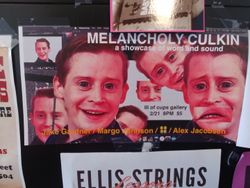
The other aspect of Lincoln that feels the most emblematic of the city for me, and what I miss most about it, is the really strong grassroots culture-making and the amazing wealth of culture-makers, aka people who have cool ideas and put those ideas into action[2]. I know the history goes back at least half a century; Nebraskans For Peace was founded in 1970 in opposition to the Vietnam War, and Nebraskans for Alternatives to the Death Penalty has been active since 1981. Now I'm getting distracted from actually finishing this post because I want to keep looking for records and memories of different groups I know of, some of which still exist and some of which don't, a seductive rabbit hole I've fallen down before, for a few months at one point compiling notes and even attempting to arrange a few interviews.
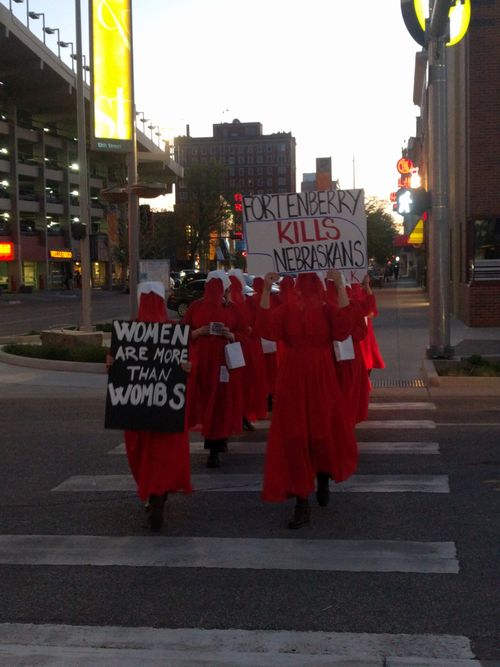
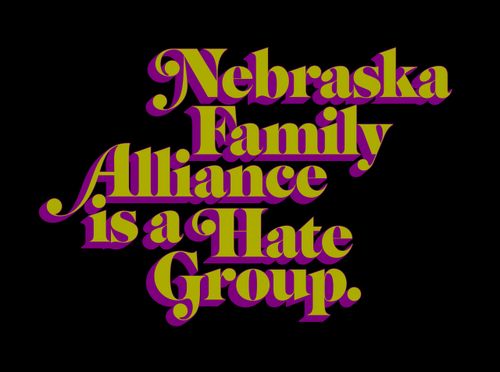
The Black Cat House has been open for more than a decade now; Common Root's been operating since 2008. I open every one of those pages and see the names or faces of people I love. There's local music played in local bands and at front porch festivals and in house venues or rented out buildings somewhere between South Salt Creek and the Near South. Porch Art Palooza, my beloved. The names of long lost community spaces and cultural projects pile up: the Clawfoot House, Church, the Lavender Mansion, the Colonel Mustard Attic Theatre Company, SPCE Commons.
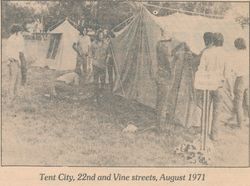
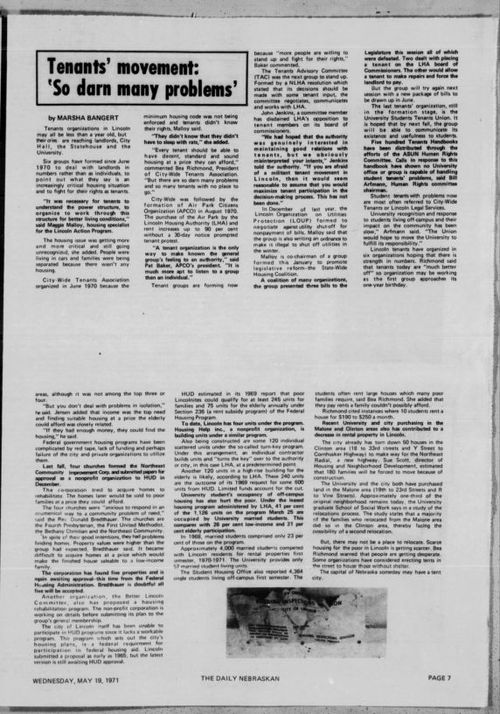
Occupy Lincoln's encampment lasted more than 100 days, outlasting the original protest grounds in Manhattan and dozens of other cities. It wasn't Lincoln's first encampment, either - the Lincoln City-Wide Tenants Association[3] mounted a "Tent City" direct action in 1971 with over 100 people participating from over 20 families - fighting for more housing support for low-income families and protesting the University of Nebraska's expansion into neighborhoods where many low-income families lived, causing displacement.
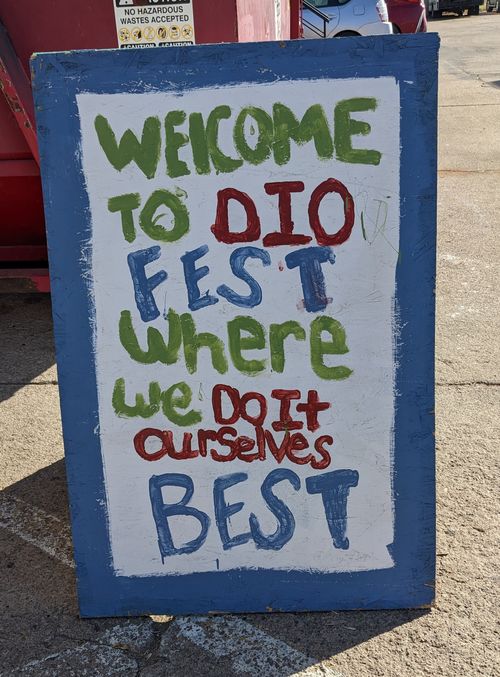
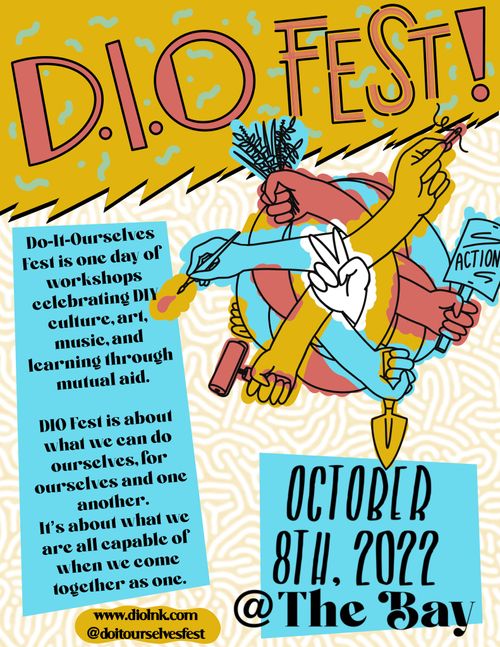
So many more collective efforts I could name - Everett Free Grocery Program, Lincoln Community Care, We Are Vital. The efforts without a name, like the series of disaster preparedness potlucks that sprung up after a workshop at the 2022 Do It Ourselves Fest I & others organized. So much for my quick blog post before bed; I could go on all night.
When I think of Lincoln, I think of people who have ideas about ways to bring people together and make something happen, and they go out and start doing it. Probably that kind of thing happens in other places, too. I wonder though if it happens less than it used to in many of them. I've heard it said that an affordable cost of living is a big part of what made the most famed artsy neighborhoods of New York City and San Francisco in the mid-to-late 1900s be so vibrant and creative; sometimes I wonder if the thing that was happening in those places is what is still happening in Lincoln, with a really vibrant arts and activism scene because people can still afford to do weird stuff and go to weird little events instead of spending all their time hustling on extra shifts or gig work jobs to make rent.
There are fewer people, certainly, and few if any of them get famous or have things named after them that are taught in art history or political science classes. But they are there and always have been, and they are a big part of what The Good Life in Lincoln means to me.
At a coffeeshop (somehow mostly Cultiva in those days), connecting to the internet with your laptop sometimes just wouldn't work when you showed up, even though other people were obviously using it just fine at that very moment. After the router was restarted though, you could get on, and so could everyone else who was perhaps mildly annoyed at having their connection reset when theirs was working just fine. I have since learned that the reason this was happening and why a router restart fixed it was likely due to DHCP leases and the way IP addresses are handed out on router default settings - essentially the router was out of IP addresses it was allowed to hand out to new connectors, but once the router restarted, all those previous IP addresses used by previous customers who'd already left were available again, and everyone currently in the shop could get online. If I could go back in time with this knowledge, I would somehow try to convey this knowledge to whatever barista seemed most likely to let me try to open up the router settings myself and adjust the settings so this would stop happening. ↩︎
I wrote more about Lincoln from this perspective previously. I probably will again at some point, too, honestly. ↩︎
I previously wrote up more details on the Lincoln City-Wide Tenants Association, including some info on finding sources. ↩︎